Turku by Train
Two hours west, Finland’s oldest city lost the capital to Helsinki in 1812 and kept everything else — a castle standing since the 1280s, the national shrine cathedral, and a noon bell the whole country hears on the radio.
The short version
- Trains run Helsinki to Turku in about two hours on regular schedules (vr.fi), landing a short walk from the cathedral end of the Aura river’s walkable spine.
- The first-city credentials are the history: Turku (Åbo) is Finland’s oldest town and served as its capital and ecclesiastical center until 1812, when the new Russian grand duchy moved the government to Helsinki — leaving Turku the seniority and the river.
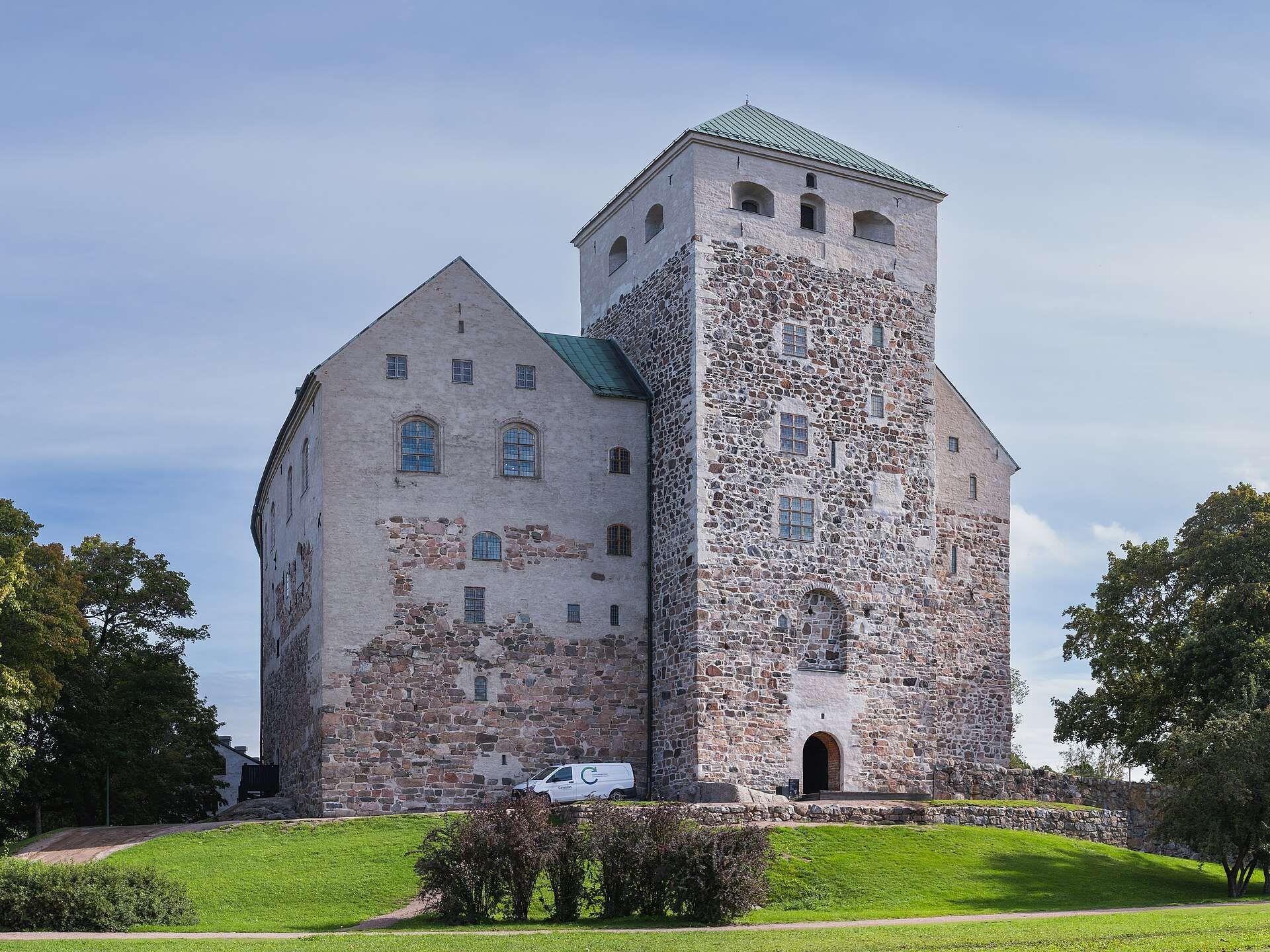
- Turku Castle has stood at the Aura’s mouth since the 1280s — among the largest surviving medieval buildings in the Nordic countries — with Renaissance state rooms, dungeon layers, and the museum circuit that per the alarm takes its proper two hours (castle and city information at turku.fi).
- The cathedral is the national shrine per the alarm: consecrated in 1300, mother church of the Church of Finland, holding royal and national tombs — and its noon bell has been broadcast live on Finnish radio since 1944, a wartime custom the country never dropped; standing on the square at twelve joins the ritual in person.
- The 1896 market hall (Kauppahalli) runs the eating tier: wooden stalls, archipelago fish, Karelian pies, and lunch counters the town treats as institutions.
- The riverbank completes the register: the Aura’s tree-lined promenade, the little Föri chain ferry crossing (free, beloved, in service over a century), museum ships, and the moored restaurant boats whose decks per the alarm serve the sun when it cooperates — with Naantali and the Moomin island as the family extension beyond the day’s real edge.

Getting there
The two-hour rail line makes Turku the committed-but-clean Nordic day this network likes: one train, one river, everything on foot at the far end. The shape is a riverbank line-walk — cathedral end to castle end runs about three kilometers of the city’s whole biography, with the Föri crossing and the market hall as the midpoints. Summer adds the riverboat decks and the archipelago’s ferry ambitions; the day trip stays on the river and leaves the islands for the overnight version.
The day
Cathedral first, timed to the alarm’s ritual: the square at noon, the bell into the national airwaves, and the interior’s tombs and brick-Gothic calm afterward — the Finnish history syllabus in one building. The market hall handles lunch at stall counters. The riverbank walk downstream strings the town’s layers — the old great square, the Föri’s free crossing taken for its own sake, museum ships at their moorings — to the castle’s pale bulk at the mouth. The castle’s two hours per the alarm run keep to state rooms: the medieval core’s stone spirals, the Renaissance halls’ restored color, the prison centuries, and the model-and-artifact museum floors that explain why this building is Finland’s history in cross-section. The evening options split by season: a restaurant-boat deck beer against the current, or the direct train home with the archipelago light doing the windows.
When to go
May through September is the full version — riverboats out, castle courtyards in sun, market hall spilling to terraces — with June’s white nights stretching the day past any train schedule’s opinion. The Medieval Market (early July) and Ruisrock (the festival island, July) mark the crowded peaks. Winter compresses to castle, cathedral, and hall — all genuinely all-weather — plus the Christmas City program Turku runs as Finland’s official Christmas capital, declaration of Christmas Peace included, broadcast like the bell since long before television.
Frequently Asked Questions
Why did Turku lose the capital?
Geopolitics: when Russia took Finland from Sweden in 1809, the new grand duchy wanted its capital closer to St. Petersburg and further from Swedish influence — Helsinki got the title in 1812, and the great Turku fire of 1827 sealed the shift by destroying much of the old city. The castle, cathedral, and the seniority stayed.
What’s the noon bell tradition exactly?
Finnish radio has broadcast the Turku cathedral bell striking noon every day since 1944 — begun in wartime as a national constant and never discontinued. It’s a small, profound piece of shared national time; hearing it on the square while the country hears it everywhere is the alarm’s inside-a-ritual clause made literal.
Is the castle really worth two hours?
At Nordic-largest-medieval scale, yes — the circuit runs genuine medieval keep, Renaissance ducal halls, and centuries of museum layers, and rushing it wastes the walk down. Families lose extra time happily in the children’s history floors. The two hours per the alarm are the fair median, not the maximum.
Can I add Naantali and the Moomins?
As an overnight or a family-priority swap, yes — Naantali’s wooden old town sits a short bus away, with Moominworld on its island in summer. Stacked onto the full Turku day it breaks the honest math; choosing it INSTEAD of the castle is the legitimate family version of this trip.
Turku or Porvoo or Tallinn from Helsinki?
All documented on this network: Porvoo for the closest wooden-town half day, Tallinn for the ferry-abroad day with its timezone trap, Turku for Finland’s own deep history at two rail hours. Seniority versus proximity versus passport — the honest Helsinki week ranks them by appetite and does at least two.